Opera singers are often used to add captivating sounds as well as deeper symbolism to many of the films we enjoy. Simple recall some of your favorite films and browse through how many of them feature some lady singing opera through one scene or another. Happens more often than you thought, correct? The classic Benjamin Button scene featuring the former opera singer lighting the halls of her long-term care facility with her beautiful voice and many others.
Here are some more classic films I bet you didn’t remember featured some Opera into their scenes:
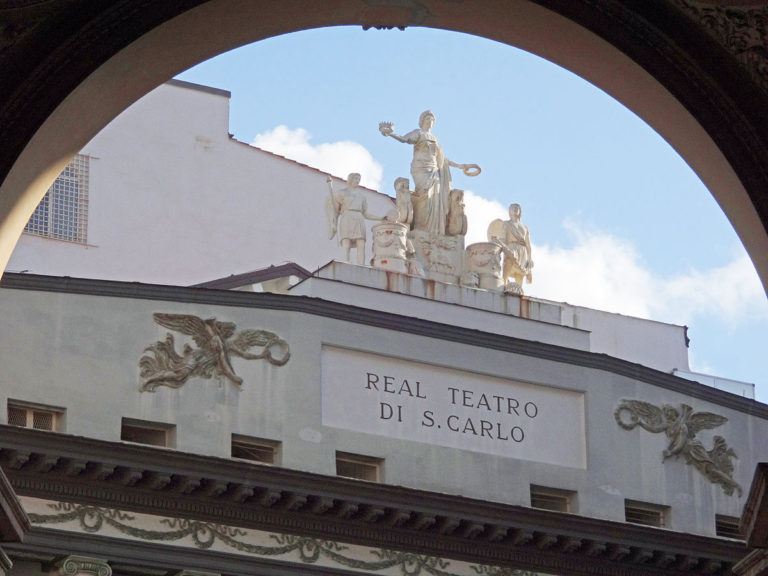
Taking a trip to Italy for their glorious opera house in Naples is not to be missed. As the most seasoned in Italy and one of the biggest in Europe, San Carlo is a genuine sight to be seen. The theater was amazingly inherent just a large portion of a year in 1737 and is celebrated for its marvelous acoustics, particularly thinking of it as’ so huge. It may be one of the greatest and most acclaimed yet San Carlo is somewhat more than only an opera house. It’s popular for having some very vocal individuals from the group of onlookers in front of an audience, yet then this is the place opera is most at home so it can be forgotten. On the off chance that you need some place greater and very much acted then travel north to La Scala in Milan yet in the event that you need a greater amount of an affair then this is your best wager.
Gran Teatre del Liceu
The area this time is Barcelona in Spain and the Gran Teatre del Liceu is one of the finest in the entire nation. Constructed in the Nineteenth Century, it’s not one of the most established in Europe but rather absolutely a standout amongst the most elite as far as exhibitions. It’s gigantic as well and after La Scala it’s the second-biggest in Europe. It has been the stepping ground for a significant number of the best opera vocalists in present-day theater and once housed a certain Jose Carreras in his more youthful days.
Wurttemberg State Theater
If the prize was for the loveliest building then the home of the Stuttgart State Opera would be in the number one spot. In the same way as other of the opera houses above and around Europe, the Second World War appeared to hit this theater hard. It was revamped after the war however the first building was finished in 1912 by architect Max Littmann. It’s one of the more unmistakable of theaters, as the established sections prop up the bended stone building which neglects an excellent lake. It situates 1400 individuals and is very much practiced in putting on some, if not all, of the greatest operatic shows in Germany.
Prague Estates Theater
This neo established theater in the Czech capital of Prague is popular for being the venue where a certain Amadeus Mozart initially directed an execution of his opus Don Giovanni. From that point forward it’s gone from quality to quality and established itself both in its own nation and crosswise over Europe similar to the best place to experience Mozart’s operas in the venue he cherished so profoundly.
Glyndebourne
It doesn’t come more bourgeoisie than Glyndebourne, UK. If ever you thought opera was only for the higher classes then… you’d be practically right in the event that you went on a night out to the well-known East Sussex opera theater. Settling in the dainty English wide open is the 700-year-old nation house that now has a general limit of in the ballpark of 1,200 opera significant others. The building has been given a major make-over throughout the most recent a quarter century in 1992 it opened its ways to another mind-boggling £34 million theater. A considerable measure of the cash originated from an incredible number of private benefactors so tragically they take need over a hefty portion of the seats. Be that as it may, for the individuals who feel they possess the right clothing (dark tie and night dress) then it yearly has he Glyndebourne Festival Opera and is a greater amount of a foundation and experience now than your normal opera house.
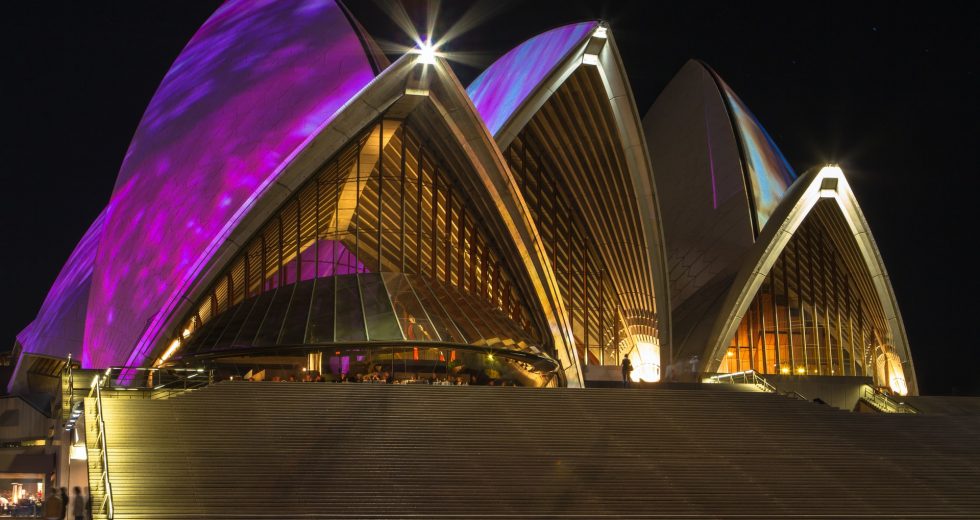
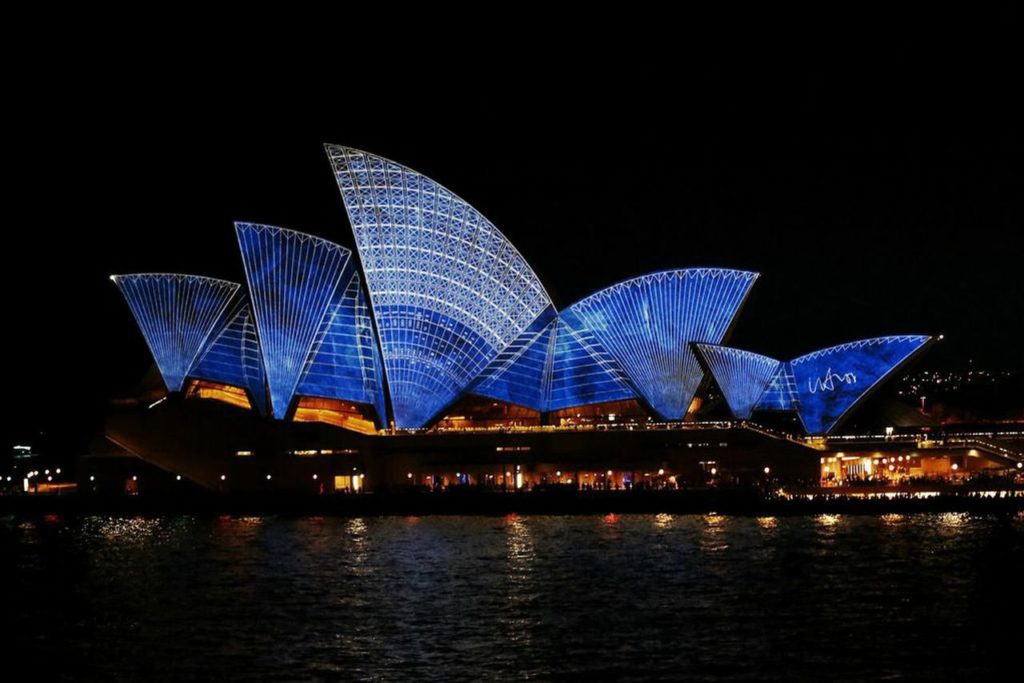
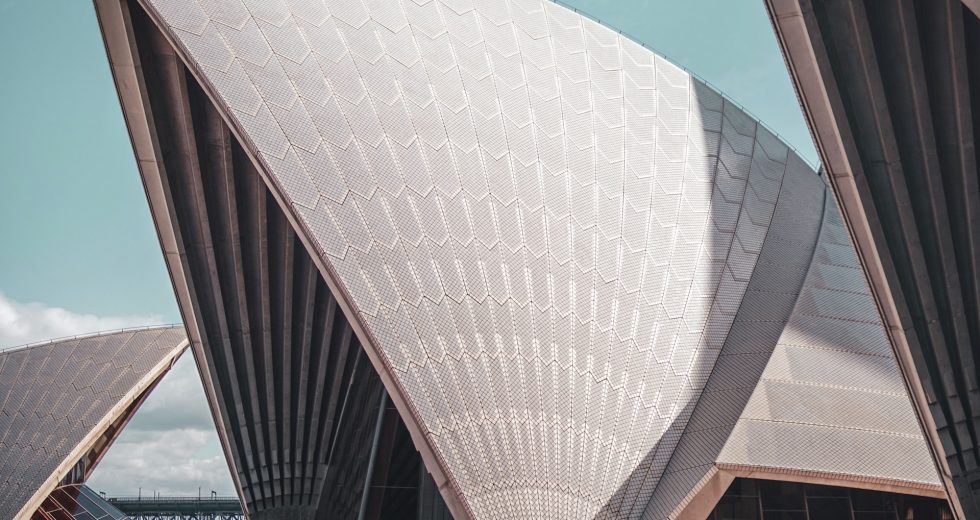
Every year, the Sydney Opera House hands over its famous sails to craftsmen who use projectors to energize a Michael-Bay-commendable blast of hues over its skin. The impact is the incredible blend of the world’s best visual specialists wielding the world’s most intense devices in CGI.
This year, the distinctions went to the expansive scale liveliness studio Universal Everything. Keeping in mind Universal Everything is known for CGI that is showed up all around from Coldplay shows to Radiohead applications, they took an alternate propriety when curating the current year’s presentation, the Living Mural: They swung to 100% hand-drawn liveliness, penned by 22 specialists from over the world.
“Rather than earlier years’ craftsmen’s utilization of cutting edge CGI, our simple, hand-made activity procedure uncovers a human soul in the drawings,” composes Universal Everything Founder Matt Pyke in a press discharge.
Every artist was given a 30-second piece to work with, and needed to utilize a dark foundation alongside a restricted shading palette. They were given a decisive word like “develop,” “rise,” or “ricochet” to use as a general visual subject. Prominently, the artists did still utilize advanced apparatuses—like Illustrator—yet movements were all conceived from portraying with a stylus as opposed to clicking and dragging with the shape instrument.
This distinction is unmistakable, and recognizing the defects feels abnormal at first since 3-D projection mapping is normally known for its exactness. Yet, the Living Mural opens to hues that glimmer with lumps of shading missing from frames, which prompts an extremely human-feeling activity that is hard to depict in its own privilege (without indicating Yellow Submarine or the hallucinogenic PBS kids’ customizing of the 1970s.)
It’s sufficient to advise you that, while the PC driven movement of today is pretty much impeccable, there is a great deal more to craftsmanship than flawless execution.
If “opera” brings a picture of a fat woman singing and sends you fleeing, you’re passing up a major opportunity. Numerous operas are famous to the point that they’ve gone into popular society. Truth be told, you most likely definitely know more about operas than you might suspect. Here are some of the operas you didn’t know you already know and like:
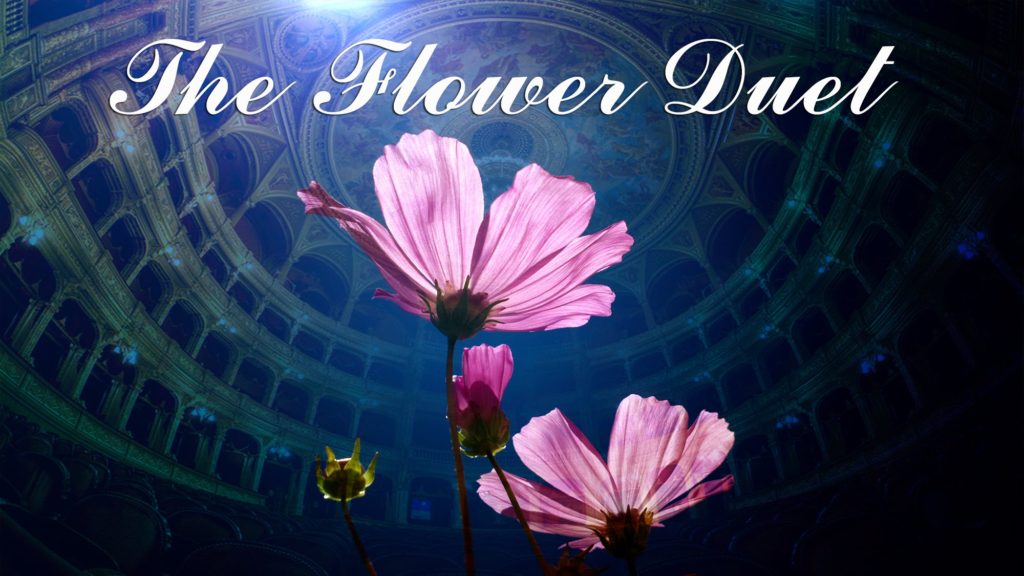
Léo Delibes’ Lakmé: The Flower Duet
Lakmé is an opera created by French arranger Léo Delibes in 1881, taking into account the personal novel Le Mariage de Loti by Pierre Loti (about Loti’s sentimental contact with an intriguing Tahitian young lady, how’s that for a reason of the novel?). The opera is acclaimed for its intricate and lovely tunes.
Synopsis: The opera speaks the truth an Indian young lady named Lakmé, girl of an obsessive Brahmin minister. One day, a British officer named Gérald inadvertently trespasses on the grounds of the sanctuary where he experiences and becomes hopelessly enamored with her. At in the first place, she is perplexed however later she develops to cherish Gérald.
Giacomo Puccini’s Madame Butterfly: Un Bel dì Vedremo
Synopsis: Madame Butterfly is an anecdote around a Cio-Cio-San, or “Butterfly” as she is known not companions, a youthful Japanese geisha thus of the twentieth century, Nagasaki. Butterfly repudiates her confidence and weds an American mariner named Lieutenant B.F. Pinkerton, who left Japan soon a short time later however guarantees to come back to her.
Where have you heard it? Love is a Many-Splendored Thing , Fatal Attraction.
Pietro Mascagni’s Cavalleria Rusticana: Intermezzo
Synopsis: Mascani’s Cavalleria Rusticana (or Rustic Chivalry) is an account of desire, reprisal and selling out. The story starts when Turridu, a returning fighter observes that his genuine romance Lola had hitched another man named Alfio while he was away. Turridu tempts a young lady named Santuzza, however then likewise begins taking part in extramarital entanglements with Lola, who understands that regardless she adores him. Santuzza, spurned by Turridu, informs Alfio concerning the undertaking. Infuriated, Alfio challenges Turridu to a duel until the very end and slaughters him.
Where have you heard it before? Godfather Part III (1990) and Raging Bull (1980)
Richard Wagner’s Die Walküre: Ride of the Valkyries
Richard Wagner formed Die Walküre (The Valkyrie) as a component of four epic operas called Der Ring des Nibelungen (The Ring of the Nibelung, or all the more generally Wagner’s Ring Cycle) composed through the span of around 26 years, from 1848 to 1874. Also, by epic, we mean EPIC: the four operas have an aggregate playing time of around 15 hours, split more than four evenings (and yes, Wagner “opera marathon” has been performed some time recently).
Synopsis: The Nibelung diminutive person Alberich fashioned an enchantment ring with the ability to administer the world from gold stolen from the Rhine maidens of the waterway Rhine. Of course, everybody needs it, including Wotan (or Odin, the head of the Norse divine beings).
Did Wagner motivate Tolkien? In case you’re thinking about whether Wagner’s Ring Cycle and J.R.R. Tolkien’s The Lord of the Rings are connected, that is on account of both individuals were motivated by the same Old Norse mythologies. Tolkien said “Both rings were round, and there the similarity stops.” (Carpenter, H. also, Tolkien, C. 1981 The Letters of J.R.R. Tolkien)
Where have you heard it sometime recently? Apocalypse Now.
George Gershwin’s Porgy & Bess: Summertime
Ella Fitzgerald and Louis Armstrong sings “Summertime” [YouTube Link], lyrics
George Gershwin did not limit himself to just classical or opera – he wrote many popular songs and jazz standards, including Rhapsody in Blue, An American in Paris, and one of the most famous operas of the 1930s, Porgy and Bess.
Summary: The opera Porgy and Bess happens in Catfish Row, an invented dark dwelling in South Carolina. The opera opens with Clara singing the “Late spring” bedtime song to her infant, as the men play poos. One by one they poo out, leaving just Robbins and Crown in the amusement – when Robbins wins, Crown stirs up some dust and winds up executing him. Crown then runs, telling his lady Bess that she needs to fight for herself. Porgy, a specially challenged person and a hobo, is the one and only that solaces and sanctuaries her.
On the off chance that you like that: Another piece that is especially wonderful (by and by, I like it better than Summertime) is “I Got Plenty o’ Nuttin’.” Here’s one by Willard Whit.
Studies are usually carried out each year to determine the plays that get produced by high school theaters each year. These include plays and musicals. We take a look at the recently most popular high school plays and musicals.
1. Almost, Maine
This is a composition of nine short plays developed in 2004 by John Cariani. The play explores the aspects of love and loss in the mythical town of Almost, Maine. The play ranks very high in box office records. For the 2015-2016 year, Almost, Maine became the topmost produced play by high school theater departments.
2. A Midsummer Night’s Dream
Perhaps the oldest musical play on the list, a midsummer night’s dream is a comedy written by Shakespeare in 1595. It follows the story of the marriage between Theseus and Hippolyta, queen of Amazons. The play is set in a forest where fairies exercise control over the characters. The play scored second place among the most produced plays in the year.
3. Servant of Two Masters
This is a comedy by Carlo Goldoni originally written in the year 1746. The play revolves around Beatrice, a woman who goes to Venice in the disguise of her dead brother in an attempt to find his murderer. Her servant Truffaldino is the star of the play and tries to fulfill the wishes of his two masters, Beatrice and Florindo, the killer.
4. Twelfth Night
This is another comedy by William Shakespeare supposedly written around the year 1601 for the end at the Christmas season. The play explores twins, Sebastian and Viola who become separated when they get shipwrecked. The story then follows the classical storyline of disguise and love and the confusion that follows.
5. You Can’t Beat the House
This play follows the attempt of two seemingly amateur burglars who can’t seem to get out of a house they have broken into. This was the fifth most popular play among American High Schools in the 2015-2016 year. We now take a look at the top five musicals for the same period.
6. The Addams Family
This was the most produced musical in high school in the 2015-2016 year. The family in the play is a fictional family created by the cartoonist producer, Charles Addams. The musical basically involves the family members, Gomez, Morticia, Wednesday, Pugsley, Uncle Fester and Grandmamma, a butler and the cousin to Gomez.
7. Mary Poppins
This is a musical fantasy produced by R. Stevenson in 1964. The musical follows the story of Mary Poppins who visits an entirely dysfunctional English family and applies her style to make the family unit more dynamic. The film went on to receive 13 Academy Award nominations.
8. The 25th Annual Putnam County Spelling Bee
This is a comedy with the music and lyrics developed by W. Finn. The show is set in a totally fictional spelling bee event in an ambiguous middle school. The characters include six quirky young pupils and three equally quirky grown-ups who conduct the event.
9. Cinderella Musical
The Cinderella musical was originally written for television and is based on the very popular fairy tale by the same name. It is basically the story of a young girl living the life of a servant forced by her stepmother who is then transformed into a princess with help from her fairy godmother.
10. Legally Blonde
This is a comedy that was adapted from a book by the same title from Amanda Brown. The film follows the story of a sorority girl who is trying to win over her ex-boyfriend back by obtaining a law degree. It was the fifth highest produced musical in American high schools in the 2015-2016 period.
Opera houses are some of the most precious architectural works that come into one’s mind. Most remarkable opera houses were not just built for tenors and sopranos but they were also built to showcase a country’s wealth, culture, and power. For those who are lovers of operas or they just love how an opera house looks, here is a list of some of the best opera houses in the world:
1. Metropolitan Opera
From its creative and experimental work, classical performances this opera is located in in Lincoln center and was established in 1880. It houses two theatres. New York City Ballet, a library, and New York Philharmonic.
2. Paris Opera
It is housed in Palais Garnier and Opera Bastille and it was founded in 1669 by Louis XIV. It is well known for the Frescos on its ceiling by Marc Chagall and was initially used for ballet. It’s located in Paris.
3. La Scala
It’s located in Milan Italy and its one of the most known theatre in the world founded in 1778 by Giuseppe Piermarini. Its legacy comes from Antonio Salieri first performance of ‘L ‘Europa Riconoscuita.
4. Vienna State opera
It is a beautiful opera designed in the Neo-Renaissance style by August Sicard Von Sicardsburg and Eduard Van der Null. The 1869 performance of Mozart’s ‘Don Giovanni’ led to the opening of this opera which is also known as Staatsoper. The Vienna Philharmonic Orchestra and the finest singers are among the best instrumentalists who perform. They offer cheap and affordable stand room tickets.
5. The Royal Opera House
A product of the Great Britain’s Premiere company located in a Grade 1 Historic building that is a combination of Neo-classical colonnades with a glass and iron atrium. From the delicious ice cream served, red seats to the views over Covent Garden’s rooftops the experience is just irresistible.
6. Bolshoi Opera
Located in Moscow it was initially an unattractive stone and brick structure which was later renovated by Andrei Mikhailov and was completed by 1824. It has a gallery and four balconies surrounding the orchestra seating, velvet-upholstered chairs, oriental carpet and silk-damask walls which make it impressive.
7. Hungarian State Opera House
It is the finest architecture in Hungary designed by Mikos Ybl in 1884. Gustav Mahler and Otto Klemperer are among the greatest composers attracted by this opera which features Ference Erkel flank and Franz List statues at the entrance. The bronze crafted chandelier and the structures decorated with beautiful paintings makes this opera attractive.
8. Teatro Colon
Located in Buenos Aires and was opened with the Verdi’s Aida performance of 1908. Well-known for its perfect acoustics and maintained the title of the world’s largest opera house until the 1973 completion of Sydney Opera.
9. Teatro Amazonas
Was built with materials from all over the world during the peak of rubber trade and it is located in Manaus. The Italian Opera La Gioconda was the first performance in 1897. It’s well built with marble from Italy, steel from England and furniture from Paris.
10. Sydney Opera
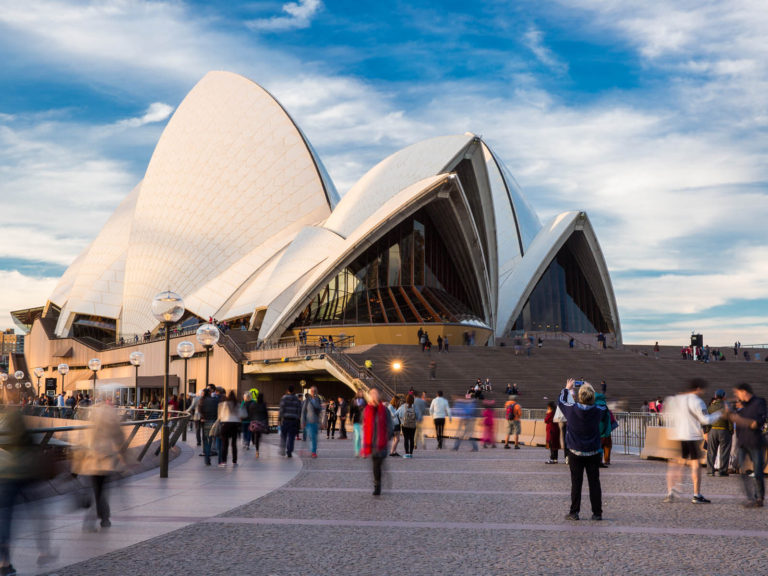
It represents the image of a large sailing ship and was built in Jom Utzon in the 20th century. It houses the Utzon Room, Concert Hall, John Sutherland Theatre and Drama Theatre. It has multiple venues for prestigious art performances and it’s located in Australia.
So for those who get goosebumps at the mention of the word opera, I hope you will have an amazing time visiting these opera houses in the world.
Buildings tend to put towns on a national or global map. Struggling towns have often had their reputation repaired by modern marvels of architecture. Most of these are often skyscrapers and museums amongst others. However, we take look at the most spectacular theaters in America, their locations, and history.
Radio City Music Hall
Located in New York, the Radio City Hall is perhaps the most architecturally significant theater in America. It is among the most stunning performance venues in the entire US. The theater was built in the year 1932 following a design by Donald Deskey and Edward Durell. The Radio city hall is the world’s largest indoor theater and has the largest stage curtain that glows in shimmering gold. Most art lovers also tend to agree that the hall is among the best-equipped theaters in the world.
Schermerhorn Symphony Centre
Nashville is very well-known for country music and its music-related TV shows. However, the Symphony Centre proves that the city also has a taste for classical music. The theater has a 1800 seat venue and is sunlit through more than 25 soundproof windows. The hall also boasts adjustable acoustics system to match the requirements for different musical genres. This is in addition to the adjustable seats.
The Egg
The theater derives its name from the egg-looking building. The theater in Albany, New York lacks any straight lines or corners making it feel very accommodating. The egg was built in 12 years and opened its doors to the public in the year 1978. The base of the egg is actually quite wide and goes down six stories into the ground. It is perhaps one of the most notable architectural structures in New York.
Kings Theater
This is Brooklyn’s biggest theater and recently underwent a major restoration. The theater was built in the year 1929 intended for movies and performances. However, the theater closed in the 1970s due to competition from other newer establishments. Low attendance and abnormally high maintenance costs forced the closure. However, a $ 94 million restoration restored it to its earlier glory with all the initial color, design and finish schemes restored as were. With the addition of modern technology, it became even better.
The Academy of Music
The Academy of music in Philadelphia is owned by the Philadelphia Orchestra Association and has been in operation for more than 150 years. The structure is fondly known as Grand Old Lady of Locust Street. It is the oldest concert hall that is still operational in America. Like many other old buildings, the theater has undergone some restoration to get it back to its earlier glory from the late 1800s.
Walt Disney Concert Hall
This is the home of the Los Angeles Philharmonic. The hall was the work of designer Frank Gehry with various stainless steel plates that were meant to symbolize musical movement. The hall is also home to one of the largest organs in the world. On one wall it stands out in a bouquet comprised of more than 6,000 pipes.
Musical comedies have been around for a very long time with some dating back to the nineteenth century. However, some have stood the test of time and have remained among the best musical comedies ever done. We take a look at the ten best of these.
A Christmas Carol (1843)
This is a novella that was first published in 1843 in England by Charles Dickens. It tells the story of Mr. Scrooge, an old miser who receives a visit from the ghost of her former business partner together with the ghosts of past, present, and yet to come. Once the visit is over, the normal miser Ebenezer Scrooge becomes a much better and kinder man. The play was written in a period when the country was still exploring the Christmas traditions and their associated objects such as Christmas trees and carols.
Fools (1981)
Fools was a comic developed by Neil Simon and follow the story of Leon Steponovich, a teacher who takes on a task to educate Sophia, a doctor’s daughter. However, he soon learns that the village has a curse that ultimately makes all the villagers stupid. To further complicate things, Leon falls in love with Sophia. The play has also been adapted as a stage musical. Fools appeared on Broadway in the year 1981.
Our Town (1938)
This is a three-act meta-theatrical play developed by Thornton Wilder. It revolves around the story of a fictional town in America by the name Grover’s Corners exploring the everyday lives of the town’s citizens. The play is in several instances set in the actual theater where it is supposed to be taking place. The main actor is known as the stage manager.
The Crucible (1953)
This is a four-act tragic play that is definitely among the best plays of all time. The play revolves around pastor Parris from Salem, Massachusetts in 1682. The pastor summons a witchcraft expert to take a look at his daughter Abigail. The pay continues with accusations of witchcraft and love affairs within the area.
Alice in Wonderland (1966)
This was a television-based play that was directed by Jonathan Miller of the popular Beyond the Fringe. The play followed a small child surrounded by adults and wondering if that is how being grown-up meant. Some of the scenes were shot at the Netley Hospital and featured several prominent British actors.
Twelve Angry Men (1954)
This film basically revolved around the jury deciding a homicide trial. It was initially a television play but was later adapted for film which went on to become highly successful. At the beginning of the trial, 11 jury members have a decision for guilty with only a single member deciding not guilty. The single-member then sows a seed of reasonable doubt into the minds of the other members.
Noises off (1982)
This is a product of Michael Frayn who came up with the concept while watching a play The two of us from the wings. He thought it looked way funnier from behind than from the front and from there came noises off, a farce was written from behind.
You Can’t Take It with You (1938)
This was a romantic comedy film that was directed by Frank Capra. The film tells the story of a man from a snobbish rich family who falls in love with a girl from a very good-natured family but who is quite eccentric. The film went on to receive various nominations and awards.
A Midsummer Night’s Dream (1595)
Perhaps the oldest musical play on the list, a midsummer night’s dream is a comedy written by Shakespeare in 1595. It follows the story of the marriage between Theseus and Hippolyta, queen of Amazons. The play is set in a forest where fairies exercise control over the characters.
Almost, Maine (2004)
This is a composition of nine short plays developed in 2004 by John Cariani. The play explores the aspects of love and loss in the mythical town of Almost, Maine. The play ranks very high in box office records.
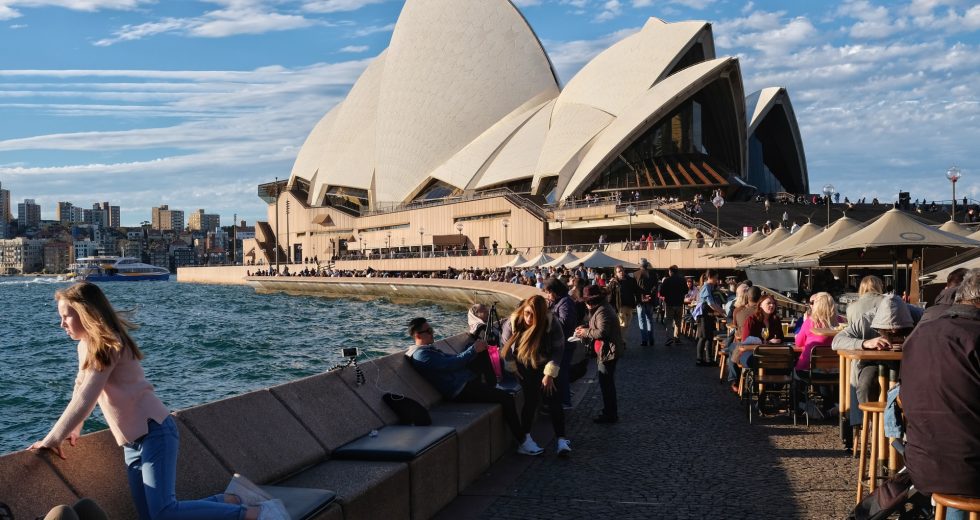
Any Australian you ask would probably tell you that the Opera House is among the most interesting places you could visit in the country. We take a look at some of the most fascinating facts about the Australian Attraction in Sydney and what makes it so popular among tourists.
Who designed it?
John Utzon did. He had been rejected by three judges who were reviewing entrants for the design competition. However, Utzon’s design was selected by the fourth judge who termed it as an outstanding design. Utzon was top among 232 entrants for the competition. He went on to win 5,000 Pounds as a prize for the win. The architect had never once visited the Sydney Harbor but benefited from his naval experience to study the area’s charts.
How was it built?
Building began in the year 1959 with a workforce composed of about 10,000 workers. However, Utzon resigned from the project as chief architect after the appointment of a new minister who went on to terminate his payments. People protested in the streets against the move but the architect left anyway. However, in the late nineties, the opera house trust made communication with Utzon again and he was reappointed. Utzon received the Gold Medal of the Royal Architects Institute in absentia. It was opened by Queen Elizabeth II in 1973.
How big is it?
Moneywise, it cost 60 million pounds despite the earlier projection estimating the figure to be 4 million pounds. The cranes that built the sails we specifically made for the project in France and each cost 59,000 pounds. The opera measures 185 meters long and 120 meters wide and has 1,000 rooms each with its own use. The Opera House’s highest point is 67 meters above sea level while the roof is made of more than 2,000 concrete blocks. The blocks are held in place by steel cables that could stretch for more than 300 kilometers.
What is it made of?
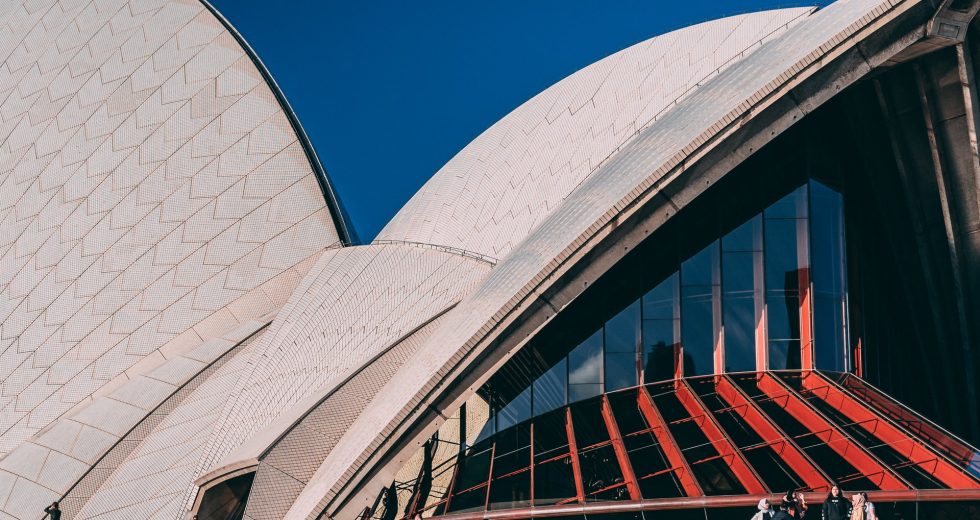
The most interesting thing about the opera house has to be the self-cleaning tiles. There are 1 million of these made for the project by the Swedish firm, Hoganas. The tiles cover the surface of the roof. Sections of the building also contain glass, totaling to more than 6,000 square meters and more than 600 kilometers of electric cables. The glass is not of the standard type and was made specifically for the project in France. The opera house sits on around 5.8 hectares of space.
Other noteworthy facts
The opera house is home to the largest mechanical grand organ in the world. The organ has more than 10,000 pipes and took a whopping ten years to build. More than 15,000 light bulbs are changed each year at the house. The building was listed as a UNESCO heritage site in the year 2007.
Funny Occurrences
During the eighties, a live chicken fell off the stage onto a cellist. Following this incident, a net was put above the orchestra to avoid such further incidences. In the late nineties, a French climber climbed all the way to the top of the roof with no ropes.
Plays have been around for a very long time and continue to be among the reasons art lovers visit theaters. We take a look at the top ten most popular plays of all time, from classics of all types to the ones that have continued to defy modernity to the ones outright amazing. The list contains plays from as early as the early 20th century to the late 80s.
A Street Car Named Desire
This is an unforgettable American classic. It takes the form of a tragic play with variations including a 1951 film. The play revolves around Blanche who moves into her estranged sister’s apartment with sexual tension developing between Blanche and Stella’s husband, Stanley. Blanche and Stanley are constantly at each other even getting to the point where they threaten each other after Blanche tries to convince Stella to leave her husband for another man. The play is mainly about sexual realism where Blanche exists and is affected by her past while Stanley, on the other hand, lives in the present. The two cannot coexist. The play ends with Blanche being taken to an asylum after Stanley rapes her.
The Crucible
This is a four act tragic play that is definitely among the best plays of all time. The play revolves around pastor Parris from Salem, Massachusetts in 1682. The pastor summons a witchcraft expert to take a look at his daughter Abigail. The pay continues with accusations of witchcraft and love affairs within the area.
Waiting for Godot
This is considered by many to be the greatest play of all time. It is however agreed that despite the play’s seemingly simple setting, the possible meanings are quite dense and can be interpreted in various ways. The play is set on a country road, where the main characters, Estragon and Vladimir wait for Godot by a tree. They are not sure whether they are at the right place to wait for Godot. They engage in conversation which is only interrupted by the arrival of Pozzo and his slave, Lucky. A boy then delivers a message to the two that Godot will not be meeting them on that day but the following day. The play ends with the two deciding to depart but none moves.
Antigone
Antigone is among Sophocles seven plays that have survived. The play is set in ancient Greece, the palace of Thebes. Two sons of Oedipus, Etiocles, and Polyneices kill each other in a fight for the throne. The king, Creon orders a burial for Eteocles but decrees that Polyneices be left to rot or eaten by animals. His niece, Antigone wants to bury Polyneices and plots with Ismene to do so. The play ends with Creole having to pay for the death of Antigone, Ismene and Haemon, who was in love with Antigone. They all die in deaths related to each other all leading back to Creon. Creon’s wife also kills herself upon realizing that their son, Haemon stabbed himself after finding out that Antigone hanged herself.
Long Day’s Journey Into Night
Set in 1912 at the Tyronne Family summer home, the play revolves around James, Mary and their sons, Jamie and Edmund. The mother, Mary has been spending time at a sanatorium for morphine addiction. The play brings out the relationship between each two members of the family, the inability of the woman to get into the present and that of the sons to become the men their father had hoped. The play ends with Mary appearing in her wedding dress talking about her love for her husband when they met. This seems to be repeated each day that must get into a night.
Hamlet
The list wouldn’t be complete with one Shakespeare’s greatest plays, Hamlet. The play revolves around Hamlet, whose father has recently died, Claudius, who marries Hamlet’s mother and Fortinbras. There is also the occasional appearance of Hamlet’s father’s ghost. Other notable characters include Polonius, Ophelia, and Horatio. The play runs for five hours in its unedited version. It probably has the highest number of film adaptations for a play with the number currently standing at more than 160. The play has been remodeled for each and every generation.